
UV Printing for Promotional Products: The Complete Australian Guide
Discover the best method for UV printing for promotional products — covering surfaces, quality, costs, and tips for Australian businesses and schools.

Written by
Jess Kowalski
Branding & Customisation
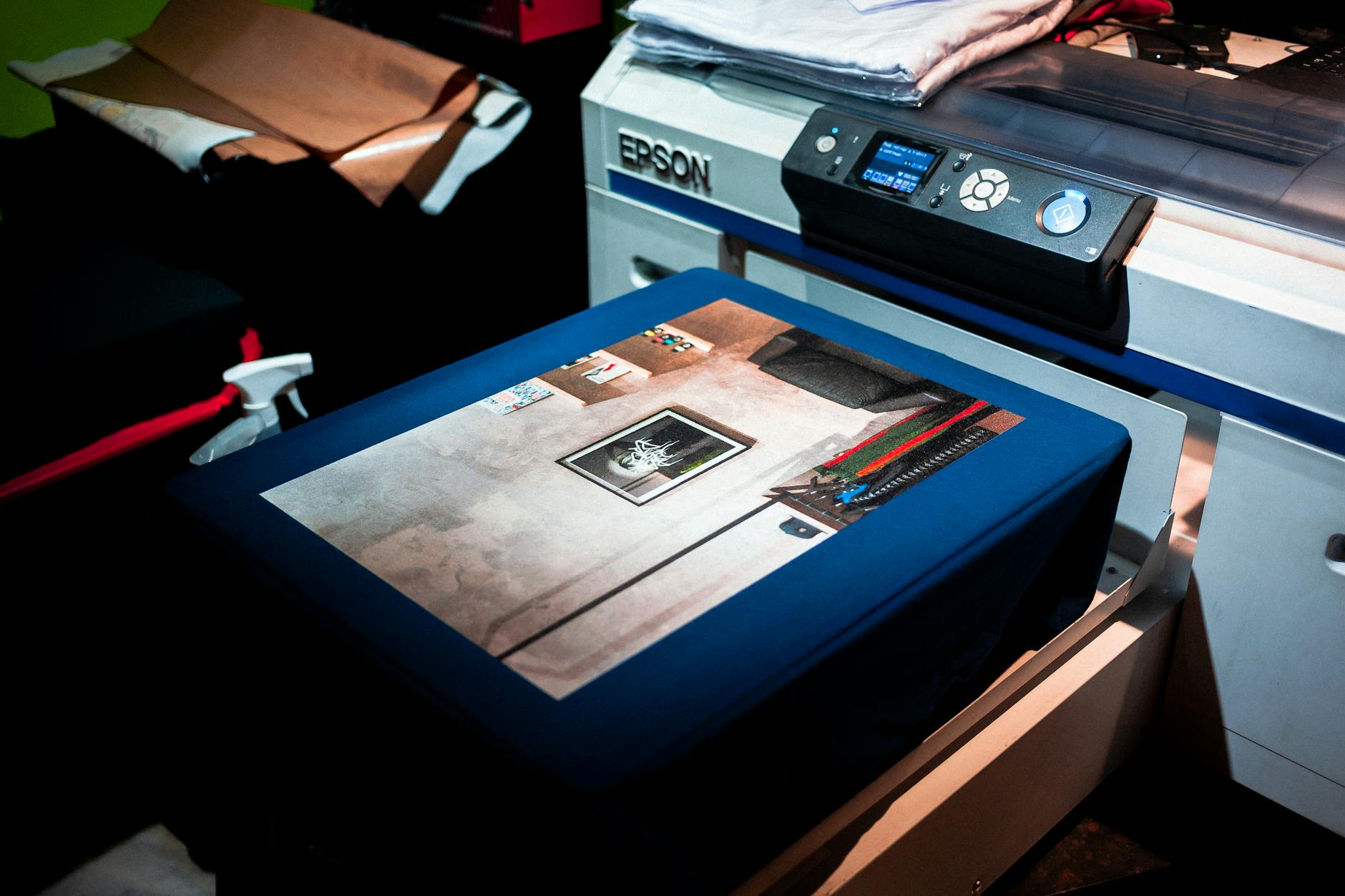
Choosing the right decoration method can make or break a promotional product campaign. Whether you’re a Sydney corporate team sourcing branded merchandise for an upcoming conference, or an Adelaide school coordinating custom gifts for year-end celebrations, the printing technique you choose directly affects how your brand is perceived. UV printing has rapidly become one of the most talked-about decoration methods in the Australian promotional products space — and for good reason. It delivers stunning, full-colour results on a remarkably wide range of surfaces. But is it always the best choice? This guide breaks down everything you need to know about the best method for UV printing for promotional products, so you can make a smarter, more informed decision before you place your next order.
What Is UV Printing and How Does It Work?
UV printing — short for ultraviolet printing — is a digital printing process where special inks are cured (dried and hardened) instantly using ultraviolet light as the print head passes over the surface. Unlike traditional printing methods that require inks to air dry or penetrate the substrate, UV inks sit on top of the surface and are immediately polymerised by the UV lamp. The result is a sharp, vibrant, durable print that resists fading, scratching, and moisture.
This method can print directly onto rigid or semi-rigid items without the need for transfer film or intermediate steps. That makes it particularly well suited to promotional products, which often involve unusual shapes, textures, and materials.
How UV Printing Differs from Other Common Decoration Methods
It’s worth understanding where UV printing sits in relation to other popular techniques before deciding whether it’s right for your project.
- Screen printing uses stencils and ink forced through a mesh — brilliant for bulk apparel and flat surfaces, but less practical for complex multicolour artwork or small quantities
- Pad printing transfers ink via a silicone pad — great for rounded or irregular items like stress balls and small gadgets, but limited to relatively simple designs
- Laser engraving removes material to create a permanent mark — a premium option for personalised engraved pens for years of service milestones and awards, but obviously doesn’t produce colour
- Sublimation bonds dye into fabric or coated surfaces — excellent for full-colour apparel and drinkware, but restricted to white or light-coloured polyester-compatible items
UV printing occupies a unique position: it handles full-colour photographic artwork, works across dozens of substrate types, and doesn’t require large minimum order quantities (MOQs) to be cost-effective.
The Best Method for UV Printing for Promotional Products: Where It Truly Shines
Not every product needs UV printing, but there are specific scenarios where it outperforms every alternative. Understanding these use cases will help you get the most value from your decoration budget.
Hard and Rigid Surfaces
UV printing is genuinely outstanding on hard, non-porous surfaces. Think about the breadth of promotional products that fall into this category:
- Drinkware — metal and plastic water bottles, travel mugs, and keep cups. If you’ve been comparing options for top-rated branded water bottles in Melbourne, UV printing is frequently recommended for full wraparound colour designs.
- USB drives and tech accessories — compact items where detail and clarity matter enormously
- Awards and trophies — acrylic, glass, and resin awards where colour imagery adds real impact beyond laser engraving alone
- Signage panels and display boards — if you’re managing signs in Brisbane for events or retail, UV printing onto rigid substrates produces vibrant, weather-resistant results
- Power banks and phone accessories — tech items that often land in the hands of younger, brand-conscious audiences
Coated and Semi-Porous Materials
Beyond strictly rigid items, UV printing also performs exceptionally well on:
- Promotional notebooks — a popular choice for corporate gifting and conference packs
- Leather or faux-leather goods — wallets, cardholders, and padfolios
- Wooden products — bamboo items like chopping boards, coasters, and utensil sets, which are particularly relevant in the eco-friendly product category
- Rubber and foam items — including novelty products like promotional yoga mats, where coated finishes can accept UV ink effectively
This versatility is what distinguishes UV printing from most other techniques. If you’re coordinating promotional merchandise for business across multiple product types, UV printing often lets you maintain colour consistency across different items — something that’s surprisingly difficult to achieve when mixing methods.
Key Advantages of UV Printing for Australian Organisations
Understanding the benefits helps clarify when UV printing is the right call.
Exceptional Colour Vibrancy and Detail
UV printing reproduces photographic-quality images and complex gradients with impressive accuracy. If your brand uses a detailed logo, subtle colour gradients, or photography in its artwork, UV printing will generally deliver a superior result compared to screen printing or pad printing. The inks sit proud on the surface and appear intensely saturated.
No Minimum Order Quantity Pressure
One of the most practical advantages for Australian businesses and schools is that UV printing is well suited to short runs. Unlike screen printing, which incurs significant setup costs and becomes cost-effective only at higher quantities, UV printing can be economical from as few as 1–25 units. This is valuable for corporate gifts that require personalisation, end-of-season award pieces (consider how this complements personalised team photo frames for end-of-season awards), or workplace safety milestone branded recognition items.
Durability in Australian Conditions
Australia’s climate presents real challenges for promotional products. UV-cured inks are resistant to UV light degradation (ironically), moisture, and abrasion — making them far more durable outdoors than many water-based alternatives. Products intended for outdoor events, sporting contexts, or promotional products for sporting events will hold their colour significantly longer when UV printed.
Rapid Turnaround
Because there’s no drying time between print passes and no screens or plates to set up, UV printing turnaround times are generally faster than traditional methods. For time-sensitive projects — like Melbourne Cup branded gift packs for race day events or a last-minute conference order — this speed can be decisive.
When UV Printing May Not Be the Right Choice
Honesty matters here. UV printing isn’t universally superior. There are situations where alternative methods are more appropriate.
Soft apparel and fabric goods — UV printing doesn’t work on t-shirts, polos, hoodies, or caps. For wearables, screen printing, embroidery, or sublimation remain the go-to methods.
Very high volume flat items — For bulk runs of thousands of identical items on flat surfaces (like tote bags or flat promotional literature), screen printing remains highly cost-competitive and may produce a more textured, tactile result that some clients prefer. If you’re sourcing wholesale branded bags in large quantities, it’s worth comparing both approaches.
Budget-constrained campaigns — If your priority is the most affordable possible decoration for large quantities, explore promotional merchandise cheap options that leverage screen printing efficiencies. UV printing on short runs can cost more per unit than high-volume screen runs.
Highly flexible or stretchable surfaces — UV inks, while durable, can crack if the substrate flexes significantly. For items like promotional yoga mats in Perth or flexible rubber items, confirm compatibility with your supplier before proceeding.
Practical Tips for Ordering UV Printed Promotional Products in Australia
Getting the best result from UV printing requires a little preparation on your end. Here’s what experienced buyers know:
Prepare High-Resolution Artwork
UV printing can reproduce extraordinary detail — but only if your artwork supports it. Supply vector files (AI, EPS, or PDF formats) where possible, or high-resolution raster files at minimum 300dpi at the intended print size. Pixelated artwork that looked acceptable on screen will be exposed mercilessly at UV resolution.
Confirm Substrate Compatibility Upfront
Not every product accepts UV ink with equal adhesion. Always ask your promotional products supplier to confirm that the specific item you’ve selected is UV printing compatible, and whether any surface preparation (such as primer coating) is required.
Request a Physical Proof for Large Orders
For significant orders, invest in a production sample before approving full production. Colours can appear differently on screen versus on a physical product, and a physical proof lets you check adhesion, coverage, and colour accuracy before thousands of dollars are committed.
Factor in Artwork Setup and Proofing Time
Even with faster turnaround times, allow adequate time for artwork setup, proofing, approval, production, and delivery. Rush orders attract premium pricing. If you’re working with tight event deadlines, communicate them clearly when getting quotes. You can also use printing near me to explore local options that might allow for faster collection.
Think About the Unboxing Experience
UV printed products often look premium enough to warrant thoughtful presentation. If you’re building a gift pack or corporate kit, the quality of UV printed items can elevate the entire promotional product unboxing experience — something that increasingly matters for social media amplification.
Matching UV Printing to Your Organisation Type
Different organisations have different priorities. Here’s how UV printing maps across key sectors:
Corporate businesses — Ideal for branded technology accessories, executive gifts, premium drinkware, and conference merchandise where quality reflects directly on brand reputation.
Schools and universities — Well suited to awards, trophies, year-level keepsakes, and specialty items where detailed artwork or school photography needs to be reproduced accurately.
Sporting clubs and associations — UV printing works beautifully on trophies, medallion cases, branded equipment, and promotional merchandise for events like caravan shows where you might also find promotional footballs for camping and caravan shows in Australia.
Events and conferences — Name badges, lanyards with resin inserts, branded notebooks, and tech accessories all benefit from UV printing’s precision.
Real estate and hospitality — Personalised gifts trends in Australia point toward high-quality, photo-realistic branded items that UV printing delivers reliably.
Conclusion: Is UV Printing the Best Choice for Your Next Campaign?
The best method for UV printing for promotional products comes down to matching the technique’s genuine strengths — vibrant colour, multi-surface versatility, short-run efficiency, and durability — to the right products and scenarios. It’s not a universal solution, but for hard-surface items, premium corporate gifts, awards, tech accessories, and any product requiring photographic-quality artwork, UV printing is genuinely difficult to beat.
Key takeaways:
- UV printing excels on hard, rigid, and coated surfaces — from drinkware and tech accessories to awards, notebooks, and wooden products
- It’s the best choice for short-run orders, detailed full-colour artwork, and situations where consistent colour across multiple product types matters
- For apparel, high-volume flat items, or highly flexible substrates, alternative methods like screen printing, embroidery, or sublimation may be more appropriate
- Always supply high-resolution artwork, request a physical proof for large orders, and confirm substrate compatibility before approving production
- UV printing’s fast cure times and no-setup-plate process make it ideal for time-sensitive campaigns and personalised promotional merchandise